Creating gentle dopamine-supporting systems when winter lowers stimulation and our modern world doesn’t.
Let me guess: it is winter and after a long day of work you feel invaded by a need of comfort, and not the best one: greasy and sweet food, the emptiest tv show and surely some doom scrolling to sedate or escape your exhausted reality.
You may be a victim of your own dopaminergic system: highs and lows from early in the day, causing you to ignore your need for rest, to comply with a never ending work and stimulation rhythm.
And still: you feel that you are missing out and not doing enough.
Well, as a narcoleptic, I have the same issue since my body and mind are continuously looking for high dopamine peaks to stay awake. So here are my notes and advices to embrace the stillness season without losing yourself.
-
I - Why are we all so exhausted
1 - Losing track of nature’s seasons
2 - Our modern world’s unnatural rhythm
II - Seasonal productivity: a way to preserve our energy
1 - Questioning what “good work” is
2 - A new definition of productivity
3 - Seasonal productivity requires recovery
III - Why is it so hard to act toward what is genuinely good for us
1 - Understanding dopamine
2 - How to build a gentle dopamine-supporting system
Introduction
I am writing this from the deepest part of my heart who’d love to hibernate and dreams about coffee to make life easier. I don’t know if the same happens to you, but as soon as the leaves fall from the trees, I feel like disappearing and waiting for the sun and colours to come back. But the world won’t stop.
Our urban world has no season. The rhythm is frenetic and I feel like resting is the major luxury of them all. Time to pause, to think about what you are doing… Sounds familiar?
For me everything slows down and even if I lately get to embrace stillness, winter is when I miss my most unhealthy ex habits (at least for my condition) like for example:
Foamy coffee in the morning so I don’t have to think about what’s coming and just act.
Sweet food to calm my anxiety when I get home.
A beer or two on a Friday night for my body and mind to finally relax.
But I am using old habits to cope with old anxieties, from when I was a 9-5 worker, an over deliverer and a very “productive” one.
How can I, from my isolated house in the forest, as a full time freelancer, keep relying on them? I can’t even remember the last time I felt stressed! Here is my theory: everything around us is saying that we are not doing enough and I think that we’ll stay restless until we accept that this is wrong.
I love the part of this project that consists in researching about all those mechanisms and it would feel frustrating not to share them outside of my sessions so in this article I’ll explore: why we are so exhausted, how to make time to rest and how to avoid turning those sacred moments into harmful dopamine peaks.
I - Why are we all so exhausted
1 - Losing track of nature’s seasons
Nature has its cycles and each season contributes to the health of the ecosystem but we tend to forget about it.
I try to walk every day (for my physical and mental health but also to get unstuck, check my “Overthinking Walk Series”), even if it’s for a short tour around my garden. I am very lucky to live in the middle of nowhere surrounded with trees, deers, birds and fields. But that’s recent.
Not so long ago, I was living in the in a beautiful but dark apartment of Gothic Quarter in Barcelona and had to bend over the balcony to see the sky. If I didn’t make the effort of walking out my of district, I could not see a tree and would then quickly lose track of the seasons. I was working A LOT. The rhythm was 24/7 and of course, I was exhausted.
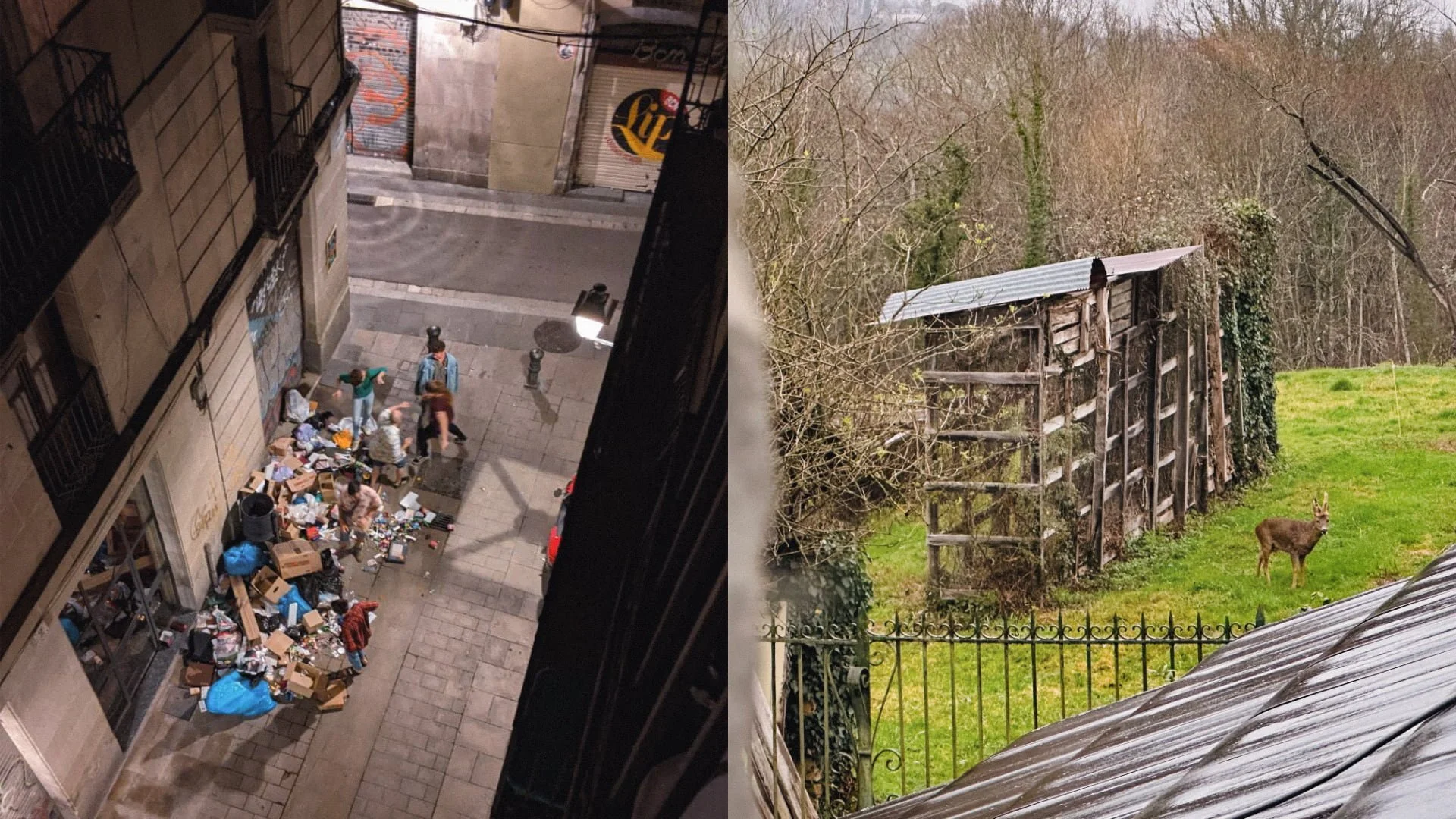
View from my window in the city vs at my home now.
Now that I am the one who adapts, there is a big wave that forces me to go with the flow but winter is the hardest one. Being surrounded with agriculture, I have constant visual clues of temperature getting lower, days getting shorter and animals disappearing. Even insects become invisible.
In french we call the act of leaving a land temporarily uncultivated to allow for the restoration of soil fertility: jachère (fallow).
I know it’s a cycle. I know it’s natural. I know I should slow down and accept naked trees, flowerless gardens, gray sky and rainy days, but still, I struggle.
Luckily, at some point, mountains get covered with snow and that’s something beautiful. But as soon as the leaves fall, I feel sad. I feel worried. I always compare the current landscape with its greener version. I can’t get myself to appreciate the neutrality of it.
Then there is a moment were I totally forget how it was when green and that thought can feel eternal.
But some days ago, I realised some flowers started to bloom. Usually yellow, like a signal of hope. And yesterday I saw the first tiny leaves growing. It filled me with joy. It makes my sight hungry for more. It’s not a lot, but if you join those with herbs and wild flowers that are not considered “serious” for a mainstream bouquet, you can make your own, and suddenly: sun is back into the house.
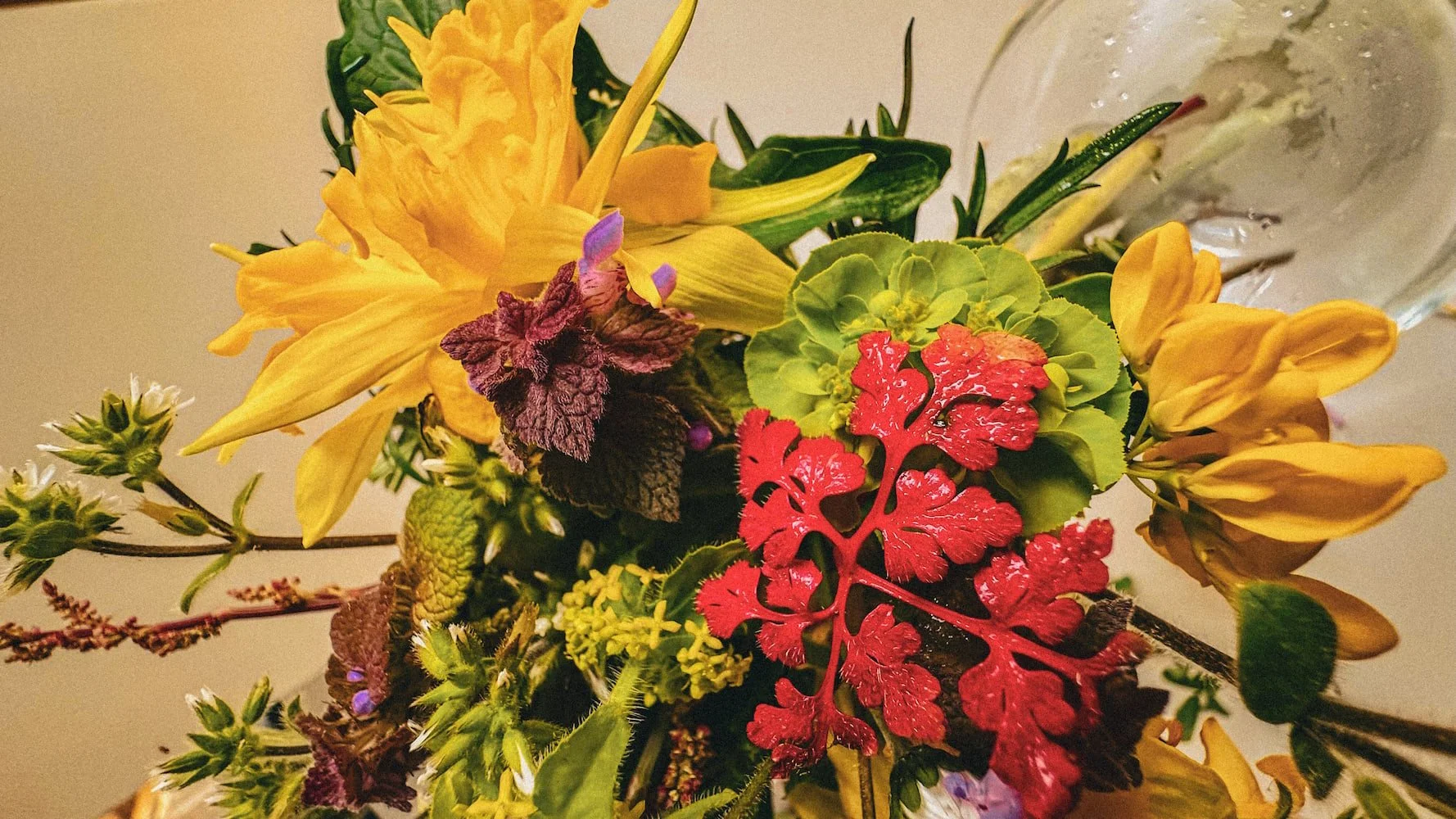
A bouquet of late winter flowers and herbs, from my garden.
Anyway, the issue is that we are growing up guided by constant stimulation, production, activities and we’ve never been said that it was ok to rest for real. Sadly, being able to take a pause has become a sign of wealth not many people can access.
We’ll have to find ways to slow down between the frenzy periods of life if we don’t want our inner land to become barren.
2 - Our modern world’s unnatural rhythm
a - Technology
It’s important to remember that without seasonality, there would be no flexibility. That adaptability is what enabled humans to thrive in nearly every ecosystem on Earth.
But here comes our reality: technology is everywhere and it tends to make everything faster and available 24/7. Giving you access to it all while still feeling like you are missing out.
Sometimes, I have the sensation that our society is constantly pushing us to ignore those beautiful tiny seasons we have inside, like for example: circadian rhythm or hormonal cycle.
Constant warmth indoors and artificial light everywhere disrupt our sleep and energy levels: morning/blue light boosts cortisol, popularly known as the "stress hormone,” while darkness triggers melatonin, know as the “sleep hormone”. As a result, we’re gradually losing our natural connection to the seasons.
b - Work
Thanks to the still classic 9 to 5 work format, we have some kind of pauses called vacations (hard to consider when becoming an entrepreneur). This time off can become what we wish the most for but when we finally get to it, many of us can’t really disconnect and enjoy nor rest because we are too exhausted or simply invaded with the feeling of “I should be doing something”.
If we’d compare ourselves to a plant, we would use winter to put our body in energy-saving mode due to low light for photosynthesis. However, we’re failing to let it happen. But here is a sentence that resonates strongly in me:
“Working with incessant intensity is artificial and unsustainable.”
Cal Newport, Slow Productivity
Cal Newport is the author of my favorite book: Deep work, a book that changed my life 10 years ago. He is the closest conceptual precursor of the concept of “seasonal productivity” (introduced in his last book Slow productivity) and I’d like to explore it as a solution to our unhealthy conception of productivity.
II - Seasonal productivity: a way to preserve our energy
1 - Questioning what “good work” is
a - Reality of today’s corporate world
At the peak of my career as an employee, before I went full time freelance, my days were filled with meetings but no time to actually work on what had to be done and it seemed that everybody was having the same issue around me. This got so intense that at some point I had to instaure the “focus/red mode” in my team. It meant that when any of us appeared in red on the chat, intents of communications were forbidden both online and in real life.
Our team members would use it in a reasonable way (only when a deadline was getting dangerously close) and I must admit it took time for the rest of the company to accept this. But you know what? After some weeks, our boundaries where respected and we all felt like we had a safe zone to enter in case of emergency.
But what happens when everything is virtual. Today’s knowledge work is very hard to both quantify and qualify since productivity evaluation relays on visual clues. We went from “seated in an office” to answering messages instantly to demonstrate busyness and sometimes have a feel of control.
Sadly, it doesn’t always mean that we are moving things forward or feel accomplished at the end of the day.
b - The difficulty with setting boundaries at work
Taking a break is a luxury but can be incredibly transformative if you do it well: unplugged, off devices and ok with having done enough. But you must be able to protect your time so others will too and that’s the difficult part.
So hard that those from our generation who get to set limits are called the Quiet quitters or accused of doing the bare minimum (when we are consistently asked to deliver as if we were a team of 10). Here is what quiet quitters refuse to do:
Working over contracted hours
Taking extra projects when they are already at full capacity
Being constantly accessible over email and chat after hours or even while working
So, are you a quiet quitter? Those rules sound quite normal to me now, but some years ago, they did not. It took several steps to establish a solid boundary around my “free time”.
I still can remember the day I deleted my work email from my phone and disabled all notifications. It felt wrong on the moment. It feels good, logical and necessary now.
If this is a step you’d like to make, get prepared to feel guilty at first. But remember, if you are oriented towards intense focus blocks and delivering quality, your limits will be respected.
2 - A new definition of productivity
Cal Newport argues in every book he has written for a more sustainable, long-term approach to meaningful work. Let’s start with his definition of productivity since it may be different from what you are used to. It is based on 3 principles:
Do fewer things (at once).
Obsess about quality (over quantity).
Work at a natural pace (since there is variation in your intensity, at least when doing serious cognitive work)
3 - Seasonal productivity requires recovery
Seasonal reflection and planning are the secret to an effective organisation system. Here are some ideas to protect yours:
a - Think in a 90 days window:
One season = one dominant focus. Accept that you won’t be able to give the same intensity to everything you have in your mind right now. Define what matters for the next three months and give it your best until next season.
Keep a place to capture off-focus to-dos so you don’t feel like you’re losing ideas nor opportunities (the foundation of every system I build in my coaching sessions).
b - Find a flexible way to recharge
If you can’t take a full month off, embrace “small seasonality” like for example: “no meetings on Friday” or “no work on weekends”.
Protect those blocks of time like if they were meetings with yourself. Add them in your calendar and make them recurring so they come first and your rest stays a priority.
c - Use shutdown rituals
Cal Newport has his own ritual he shared in this article:
“Here’s my rule: after I’ve uttered the magic phrase: “schedule shutdown, complete.”, if a work-related worry pops to mind, I always answer it with the following thought process:
I said the termination phrase.
I wouldn’t have said this phrase if I hadn’t checked over all of my tasks, my calendar, and my weekly plan and decided that everything was captured and I was on top of everything.
Therefore, there is no need to worry.”
Now his ritual seems quite complex to me, but he is a computer scientist and a best selling author so I think it is normal that mine is simpler 😅 I like the termination phrase hack and mine would be more like “Work is done for today, I have done enough and I am very happy of my advance”. I have never said it loud but will start from now on (getting closer to the crazy talk alone cat lady).
In term of actions, I quickly check my emails and Notion dashboard and mark what has to be done first thing in the morning but never act on it. Find what works for you, but do it consciously every day to signal to your brain that it is over and you are allowed to relax.
Now, you have finally created some safe space in your schedule. You feel like you deserve this rest and want to make the best of it. But here comes the vacuum. Stillness and silence are scary. You are tired of the noise and constant stimulation, but you seem to crave it as soon as it stops.
You may need to rethink your notion of rest and enjoyment so free time doesn’t become a new opportunity for over consumption.

© Mitbg000
III - Why is it so hard to act toward what is genuinely good for us
1 - Understanding dopamine
a - A chemical that is key to our survival
Exploring the functions of dopamine can be fascinating but I am not a neuroscientist and we are all different so this explanation will be based on my own experiences and readings.
In an evolutionary context, dopamine is key to survival. It is produced when we engage in behaviors that support our basic needs. For example: exercising, eating food and having successful social interactions. Neural paths are built or reinforced by those rewards to make sure we’ll repeat what is good for us. But it is not just a pleasure chemical.
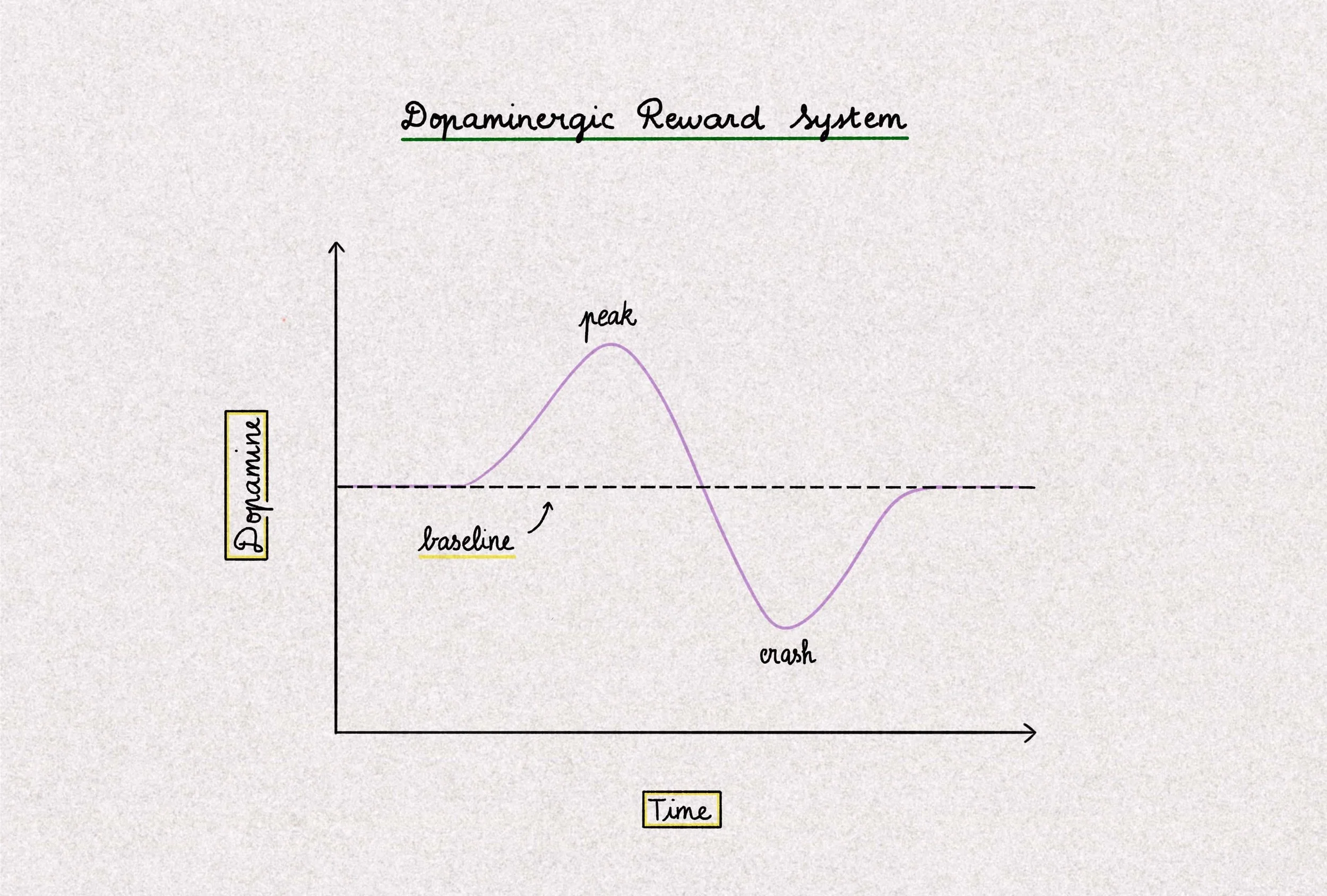
It is important to remember that dopamine is secreted before an action (anticipation) and after it (as a reward) and it will always be followed by a crash.
Sadly, our basic instincts are constantly tempted with easy access, zero effort solutions:
Eating food when you are in a hurry or too tired to cook? Fast food is here for you, bringing zero nutriments to your body.
Belonging to a tribe or building a social circle: social media are here for you, with a list of “friends” you don’t even feel like calling when you need to share something in real life.
Staying informed to avoid possible dangers: the news is everywhere, all the time, perfectly scripted to pull you into a worrying loop.
Building relationships: dating apps are shamelessly built to feed our dopamine, rarely to help us find true love.
b - Going up and down the dopamine baseline
I won’t go deep into the science here, internet is full of information and great videos about it, but here is the most important concept I have learnt about dopamine: the dopamine baseline.
As very well explained by the neuroscientist Andrew Huberman in this video: your basic level of dopamine will depend both on genetics and recent experiences.
Rewarded activities will make your dopamine levels rise above the baseline, then drop. Those fluctuations are proportional in term of intensity and duration:
The higher the peak, the lower the crash.
How to spot harmful dopamine? Easy: it requires zero effort. Constant chasing of high dopamine peaks can cause addiction and lower your baseline, leading to anhedonia.
c - The difficulty of building healthy habits
Nowadays, resisting easy pleasures can be hard when billions of dollars are invested in our attention. From advertising to social media, internet is a constant promise of something “new”.
Several mechanisms are implied to build those “short-term dopamine-driven feedback loops” as Chamath Palihapitiya, ex former Vice President of User Growth at Facebook, confessed in this interview:
Social validation
Scarcity (something is rare and only temporarily available)
Variable reward schedules (the casino effect)
Our survivals necessities are used to derive us from what is healthy for us.
If you fill your day with high dopamine peaks, your brain will constantly try to get stimulated with the same intensity to get away from this crash and make you blind about low dopaminergic actions that are actually good for you.
To keep it simple: low dopaminergic activities can sooth your high and lows, creating new neural paths that will make you more resistant on the long term.
Just for the beauty of it: a three dimensional layout of neuronal patterns (based on real microscopic images).
2 - How to build a gentle dopamine-supporting system
a - Be aware of your gentle dopamine boosters
I won’t give you a list of the 10 healthy ways to boost your dopamine since we are all different but I can give you a simple way to spot yours and to make them more present in your daily life. I started doing it after reading The happiness advantage by Shawn Achor and it changed my life.
I call this journaling technique “The 5/5 method”. Every day, right after breakfast, I analyse the last 24h and list:
5 things that made me happy
5 achievements I am proud of
In both cases, they can be very small acts like: “the sun on my skin” or “make my colleagues laugh” for the joys and “wake up without snoozing” or “cook a great meal” for the victories. Don’t feel like you should write big events there, at the contrary, we are looking for smooth dopamine peaks.
Doing it daily, you’ll force yourself to remember the good (it can be hard at the beginning) and with time, the act of writing (or thinking) and giving it some importance will make your attention focus on it naturally.
This list has saved me from the worst depressing mornings of my late life. Simple but effective.
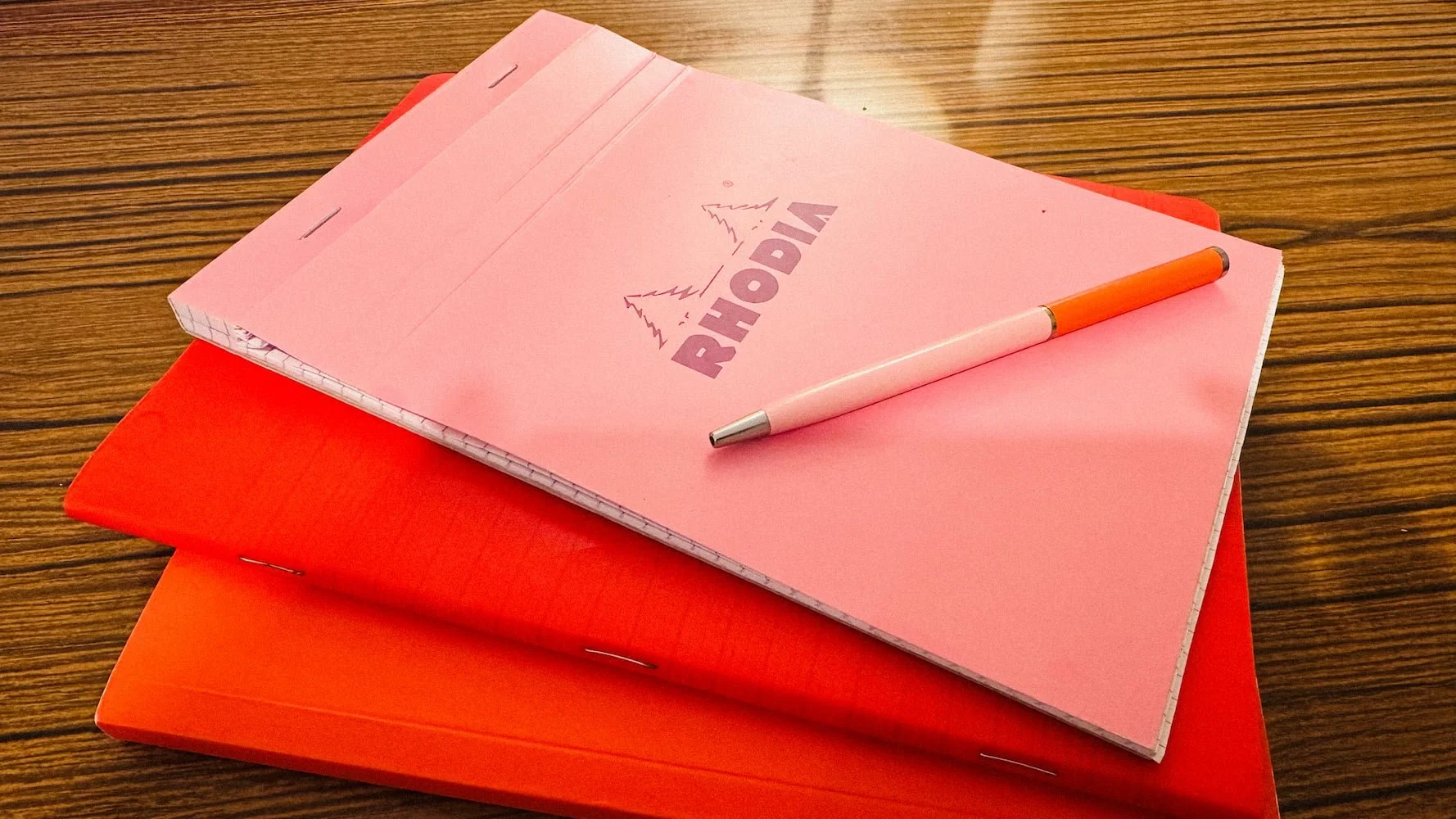
On my way to fill my third 5/5 notebook.
b - Make them more present in your life
Keep this collection of simple pleasures in a place you can visit often. That can be just reading your notes regularly, or making a visual museum of it. That’s what I have done with my gentle dopamine boosters collection. Your brain will constantly remember negative over positive, so make them easy to remember.
Get creative about it. With my band Dreyma, we made a video about those great but simple moments of life where everything feels in its place: “Zebra”. It was a friend project and I love watching it to remember how life can be gentle with so little.
Surround yourself with humans who are looking for the same thing: a healthier way of enjoying life. That would be my most powerful advice for today. For example, I really struggle to include exercise in my week, even if I know I need it. I am lucky enough to have somebody who will push me to do the bare minimum (we follow this same video everyday, together and I know I would never do it alone.
Consume content that teaches you to appreciate mundane life. I was moved by the movie “Perfect days” (by Wim Wenders) for example. It helped me so much with finding beauty in simple and usually free details of life.
c - Embrace boredom and effort
You’ll soon realise that those acts will bring you more durable pleasure because they are usually preceded by effort. I can’t explain this scientifically, but if you have tried running, you may understand my following example.
Walking is good for the body and the mind. We all know that. But here is the truth: I find walking boring. I only appreciate it if it’s on a new path, or toward a sunset, or with some good company, or with a clear goal. If not, it’s not enough to make me get out. Now, try walking right after running… I THEN LOVE WALKING. IT FEELS DELICIOUS. Everything shines around me and inside me. Am I the only one?
Now, imagine you are home or at work and you can’t get out and run. There is something you should be doing. You know you’ll feel better after, but you can’t get to start. Try boredom: set a timer and don’t do ANYTHING for 5 minutes. Don’t sleep, don’t relax, just force yourself to get bored. Well, any activity after that will feel better than doing nothing :)
If you are too addicted to your phone to even do that, here is a video you can use to procrastinate. They are many videos about phone addiction but I find this one very well done. I love his Anarogue system concept and how he talks about the vacuum.
You don’t have to suppress high peaks, just try to reduce and place them at the end of your day so they won’t affect your motivation.
Conlusion
I hope this helped you to realise that winter (and any kind of pause) can be beneficial. We just live in a world that seems to refuse to have seasons.
Protect yourself from this incessant stimulation by embracing seasonal productivity: do fewer things (at once) and focus on quality. Then take a well deserved resting time choosing gentle, repeatable sources of satisfaction over intense peaks. That is being strong too.
And get ready for spring, it’s gonna be beautiful ✨